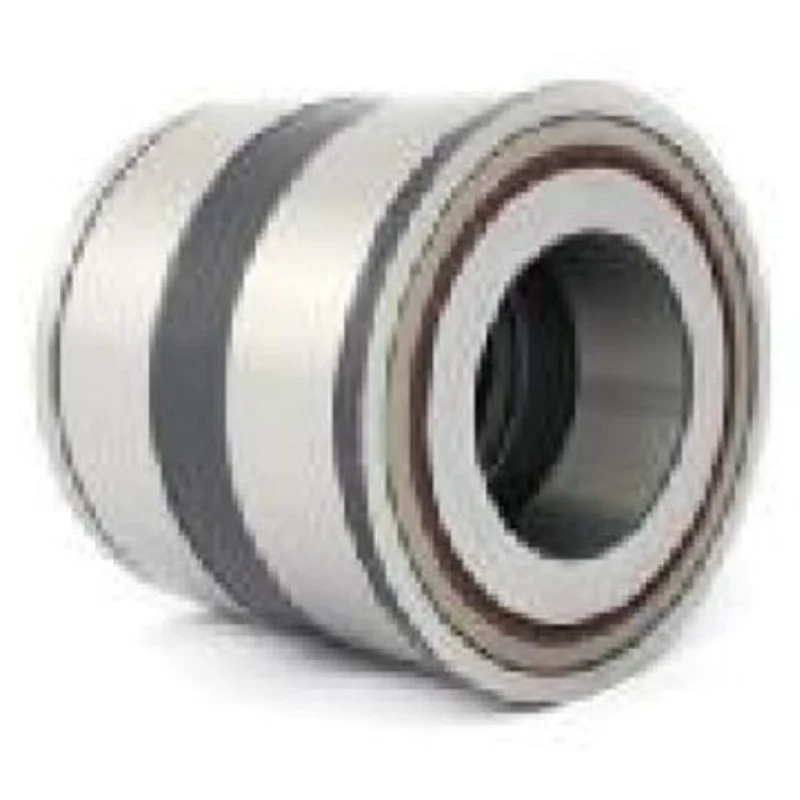
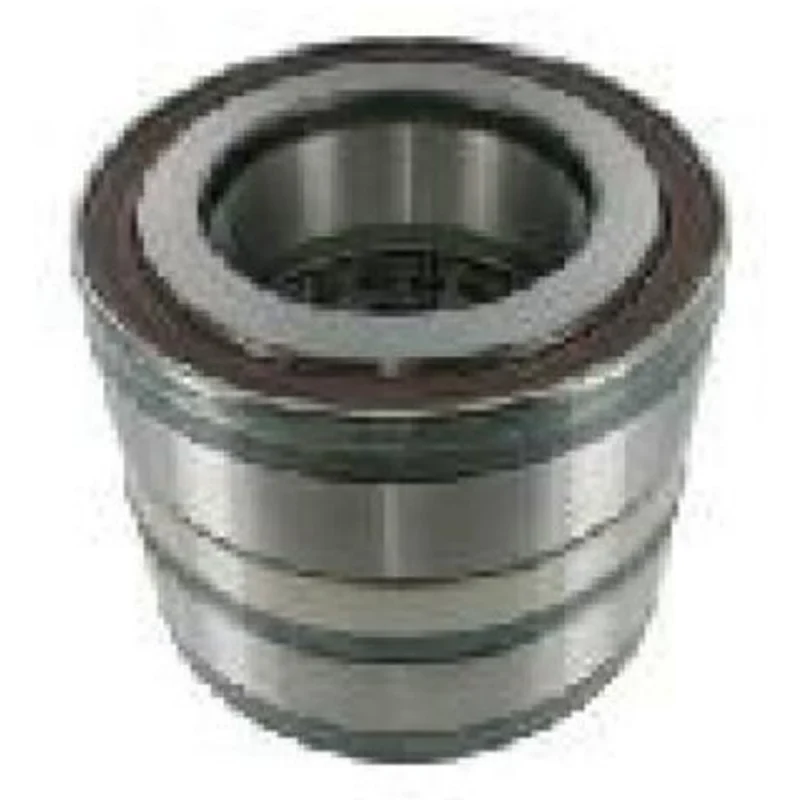
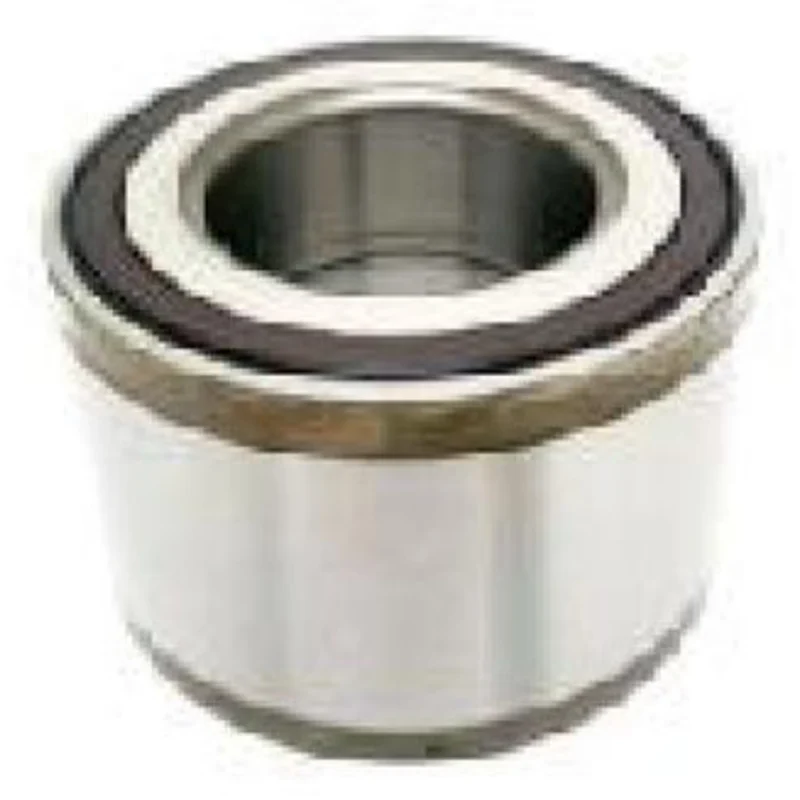
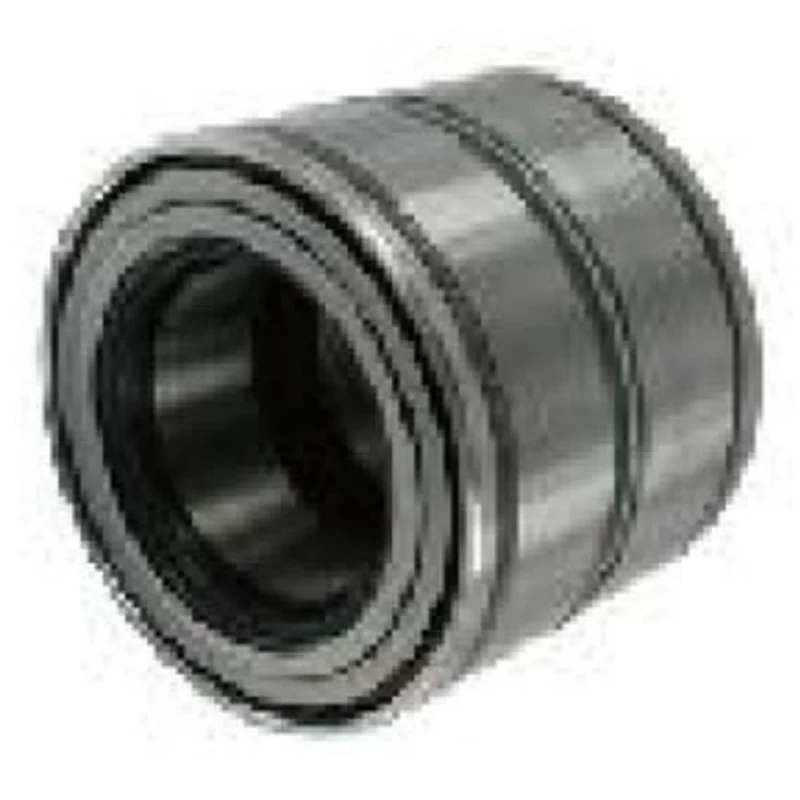
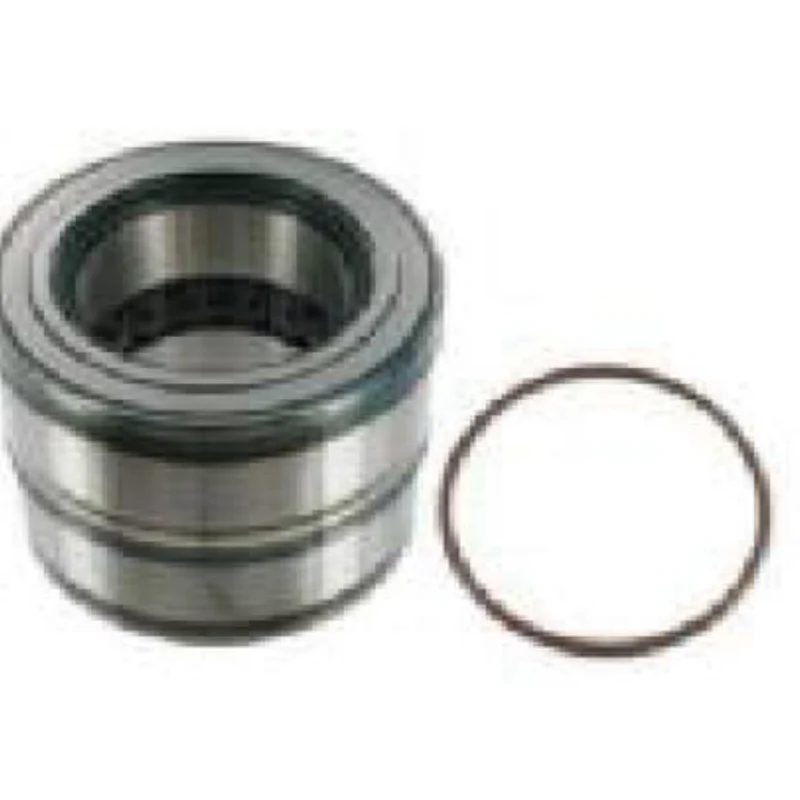
The wheel hub bearing is the part that lets a wheel turn freely while carrying the full weight of the vehicle, the braking forces and the side loads of every corner. On a passenger car it is usually a compact, sealed unit that is replaced as one piece. On a heavy-duty truck it may be a pair of adjustable tapered roller bearings, a pre-set hub or a unitized hub bearing unit, depending on the axle.
Choosing the wrong design, or installing the right one incorrectly, is one of the most common reasons for repeat wheel-end failures. This guide explains how wheel hub bearings work in cars and trucks, the main bearing types and generations, the symptoms of a failing bearing, how to diagnose it and how to identify the correct replacement.
What Does a Wheel Hub Bearing Do?
A wheel hub bearing has three jobs:
- Support the load – the vehicle weight (radial load) and the cornering forces (axial or thrust load) are transmitted from the wheel to the axle or knuckle through the bearing.
- Allow low-friction rotation – at highway speed a truck wheel bearing turns several hundred times per minute for hundreds of thousands of kilometres.
- Hold the wheel in position – the bearing controls wheel run-out and keeps the brake disc or drum square to the caliper or shoes.
On most modern vehicles the hub bearing also carries the ABS / wheel-speed signal, either through a toothed tone ring or a magnetic encoder built into the seal. A damaged bearing can therefore cause braking-system warnings as well as noise.
Wheel Hub Bearings in Passenger Cars and Light Vehicles
Cars and light commercial vehicles almost always use double-row angular contact ball bearings, and on some heavier SUVs and pick-ups, double-row tapered roller units. The industry describes them by generation:
| Generation | Design | Typical use |
|---|---|---|
| Gen 1 | Compact double-row bearing without flanges. Pressed into the steering knuckle and onto the hub. | Older and many current front axles; requires a press for replacement. |
| Gen 2 | Bearing with one integrated flange, either to the wheel (hub flange) or to the knuckle. | Front and rear axles of many cars and vans. |
| Gen 3 | Complete hub bearing unit with two flanges: one bolts to the knuckle, the other carries the wheel studs. Often has an integrated ABS sensor or encoder. | Most modern cars, SUVs and light trucks; bolt-on replacement. |
Car hub bearings are pre-adjusted, greased and sealed for life. They cannot be re-greased or adjusted, and the correct preload is achieved only when the axle nut or hub bolts are tightened to the vehicle manufacturer's torque.
Wheel Hub Bearings in Heavy-Duty Trucks, Buses and Trailers
Trucks carry much higher loads, so the wheel end almost always uses tapered roller bearings. Three layouts are common:
1. Conventional Adjustable Tapered Roller Bearings
An inner and an outer tapered roller bearing (each a cone and a cup) are fitted in the hub, and the bearing end play is set by the technician with the spindle nut. This layout is still common on North American steer, drive and trailer axles, often with oil-bath lubrication and a hubcap with a sight window.
The bearings are inexpensive and serviceable, but the result depends entirely on the adjustment. Too much end play lets the hub move and damages seals and bearings; too much preload overheats the bearing.
2. Pre-Set Hubs
The hub is supplied with bearings and a precision spacer so that the correct end play is reached when the spindle nut is tightened to the specified torque. This removes most of the adjustment risk while still using standard tapered roller bearings.
3. Unitized Hub Bearing Units
Most European trucks and buses, including Mercedes-Benz, Volvo, Scania, DAF, MAN, Renault and Iveco, and many trailer axles use a unitized double-row tapered roller bearing, often called a truck hub unit or compact tapered bearing unit. The unit is factory-set, greased and sealed, and it is clamped by the axle nut to a specified torque.
Unitized bearings give longer service intervals and fewer adjustment errors, but correct installation is critical: the unit must be pressed on with the right tool, the nut torque and locking procedure must be followed, and the seals and ABS ring must not be damaged.
Car vs Truck Wheel Hub Bearings at a Glance
| Feature | Passenger car / light vehicle | Heavy-duty truck / trailer |
|---|---|---|
| Rolling elements | Mostly balls (angular contact) | Tapered rollers |
| Typical design | Gen 1, Gen 2 or Gen 3 unit | Adjustable cone and cup pairs, pre-set hub or unitized hub bearing |
| Adjustment | None – set by axle nut torque | Manual end-play adjustment, or pre-set by torque |
| Lubrication | Grease, sealed for life | Grease (unitized) or oil bath (many conventional hubs) |
| ABS signal | Magnetic encoder or sensor often built into the unit | Tone ring on the hub or on the bearing, separate sensor |
| Replacement | Usually as a complete unit | Bearing set, bearing kit with seals and nut, or complete hub |
Symptoms of a Failing Wheel Hub Bearing
1. Humming, Growling or Rumbling Noise
The classic symptom is a hum or growl that increases with road speed, not with engine speed. It often changes when the vehicle turns, because the load shifts from one side to the other. A noise that gets louder when turning left often points to the right-hand bearing, and vice versa, but always confirm on a lift.
2. Grinding or Clicking
Grinding indicates damaged raceways or rolling elements. Clicking at low speed can come from excessive play, a loose axle nut or, on driven front axles, a CV joint, so check both.
3. Wheel Play or Wobble
A worn or incorrectly adjusted bearing allows the wheel to rock. Drivers may notice vague steering, wandering or vibration through the steering wheel.
4. ABS or Traction-Control Warning Light
Excessive play changes the gap between the wheel-speed sensor and the tone ring or encoder. A damaged encoder seal, or debris on a magnetic encoder, gives an erratic signal and sets ABS fault codes.
5. Overheating Hub
A hub that is much hotter than the others after a drive points to lack of lubricant, over-preload or a dragging brake. On oil-bath truck hubs, check the oil level and condition through the hubcap window. Severe overheating can lead to bearing seizure and, in the worst case, wheel-off.
6. Uneven Tyre Wear and Brake Problems
Hub play lets the disc move away from the pads ("pad knock-back"), which gives a long brake pedal or pulsation. It can also cause irregular tyre wear.
7. Grease or Oil Leakage
Grease on the inside of the wheel or oil on a truck hub and tyre sidewall means the seal has failed. Once the seal leaks, water and dirt follow, and bearing failure is usually not far behind.
What Causes Wheel Hub Bearing Failure?
Incorrect Installation
This is the leading cause of premature failure. Common errors include:
- Hammering the bearing or pressing through the rolling elements instead of the correct ring
- Using an impact wrench on the axle nut
- Wrong axle nut torque, or reusing a single-use nut
- Incorrect end-play adjustment on conventional truck hubs
- Damaging the seal or the ABS encoder during fitting
- Mounting a car hub encoder on the wrong side or too close to magnetic tools
Water and Contamination
Deep water, pressure washing, mud, dust and road salt can pass a worn seal and destroy the lubricant. Construction, agricultural and off-road vehicles are most exposed.
Lack of Lubricant or Wrong Lubricant
On serviceable truck hubs, low oil level, mixed or degraded lubricant and the wrong grease shorten bearing life. Sealed units fail when the factory grease is lost through a damaged seal.
Overload and Impact Damage
Overloading, kerb strikes and potholes can dent the raceways (brinelling). The bearing then becomes noisy and fails by fatigue, often long after the impact.
Wear in Related Parts
Worn suspension bushings, bent axles or knuckles, damaged wheel studs and unbalanced wheels or tyres add vibration and side load to the bearing.
Heat from the Brakes
A dragging caliper or brake shoe overheats the hub and degrades the grease or oil. Always check the brakes when a bearing has failed from heat.
How to Diagnose a Wheel Hub Bearing
Secure the vehicle on level ground, use axle stands rated for the load and follow the vehicle manufacturer's safety procedure before working on any wheel end.
Step 1: Road Test
Drive at different speeds and note whether the noise follows road speed, and whether it changes when weaving gently left and right. A noise that changes with engine speed is not a wheel bearing.
Step 2: Check for Play
With the wheel raised, grip the tyre at 12 and 6 o'clock and rock it. Repeat at 3 and 9 o'clock to separate bearing play from steering-joint play. On trucks, measure end play with a dial indicator and compare it with the axle manufacturer's specification.
Step 3: Spin the Wheel
Spin the wheel by hand (with the brake released and, if possible, the pads or shoes backed off). Listen and feel for roughness, grinding or tight spots. A stethoscope on the knuckle or hub helps locate the noise.
Step 4: Check Temperature
After a road test, compare hub temperatures with an infrared thermometer. One hub that is clearly hotter than the others on the same axle needs inspection.
Step 5: Read ABS Fault Codes
Wheel-speed sensor codes on one wheel, especially intermittent ones, may be caused by bearing play or a damaged encoder rather than by the sensor itself.
Step 6: Inspect the Bearing
Once removed, examine the raceways and rollers or balls:
| What you see | Likely cause |
|---|---|
| Flaking or spalling of the raceway | Normal fatigue at end of life, or overload / over-preload |
| Evenly spaced dents in the raceway | Impact or incorrect fitting (brinelling) |
| Rust, etching or dull grey surfaces | Water or corrosive contamination |
| Blue or brown discoloration | Overheating: lack of lubricant, over-preload or brake drag |
| Wear concentrated on one side of the track | Misalignment, bent spindle or incorrect seating |
How to Identify the Correct Replacement
Wheel hub bearings that look the same can differ by tenths of a millimetre, by seal design or by ABS ring. Collect this information before ordering:
- OE number of the bearing or hub, and any SKF, FAG, TIMKEN or other cross reference stamped on it
- Vehicle make, model, year and axle position – front (steer), drive or trailer axle, left or right if the part is handed
- Main dimensions – bore (d), outer diameter (D) and width (T or B)
- ABS details – tone ring tooth count, magnetic encoder, or integrated active sensor and connector
- Flange and bolt pattern for Gen 2 and Gen 3 car units, including number and size of wheel studs
- Brake type on trucks – disc or drum axle, because hubs and seals often differ
- Kit contents – whether the replacement includes the axle nut, seals, circlip and locking parts
For trucks, also check whether the axle uses a conventional adjustable bearing set, a pre-set hub or a unitized bearing, because these are not interchangeable without changing other parts.
Installation Tips
- Clean the spindle, knuckle bore and hub. Check them for wear, burrs and corrosion.
- Press only on the ring being fitted, using the correct press tools. Never hammer the bearing or apply force through the rolling elements.
- Check the orientation of the ABS encoder or tone ring and keep magnetic encoders away from metal debris and magnetic tools.
- Use a new axle nut and locking parts where specified.
- Tighten to the vehicle or axle manufacturer's torque with a calibrated torque wrench. Do not use an impact wrench.
- On conventional truck hubs, set and measure end play according to the axle manufacturer's procedure, then fill with the specified lubricant.
- Check the ABS sensor air gap, clear fault codes and road-test the vehicle. Re-check for noise, leaks and hub temperature.
How to Extend Wheel Hub Bearing Life
- Inspect the wheel ends at every scheduled service: play, leaks, noise and hub temperature.
- Check oil level and condition on oil-bath truck hubs and replace damaged hubcaps and gaskets.
- Avoid aiming pressure washers directly at hub seals.
- Keep wheels and tyres balanced and replace worn suspension and steering parts.
- Replace bearings in matched sets and follow the correct installation procedure every time.
Frequently Asked Questions
What does a bad wheel hub bearing sound like?
A failing wheel hub bearing usually makes a humming, growling or rumbling noise that rises with road speed and often changes when the vehicle turns, because cornering shifts the load onto the damaged bearing.
Can I drive with a bad wheel bearing?
It is not recommended, because a worn bearing can overheat, seize or allow excessive wheel play, which affects braking and steering and, in severe cases on trucks, can lead to wheel separation.
What is the difference between a wheel bearing and a wheel hub bearing unit?
A wheel bearing is the bearing alone, which is pressed or fitted into a hub or knuckle, while a hub bearing unit combines the bearing with one or two flanges, and often the ABS encoder, so it can be bolted on as a complete assembly.
Why do truck wheel bearings fail so soon after replacement?
Early failure is most often caused by incorrect installation, such as wrong end-play adjustment, incorrect axle nut torque, hammering the bearing or damaging the seal, rather than by the quality of the bearing itself.
Should wheel bearings be replaced in pairs?
Not always, but if one bearing on an axle has failed from age or contamination and the other has similar mileage, replacing both reduces the chance of a second repair soon afterwards.
How do I find the right wheel hub bearing for my truck?
Start with the OE number or a bearing cross reference stamped on the old part, then confirm the axle position, dimensions, ABS ring and brake type, or send these details and a photo to your supplier for cross-referencing.
Need a Replacement Wheel Hub Bearing?
TRUPA supplies OE-referenced wheel hub bearings, wheel bearing kits, wheel hubs and tapered roller bearings for trucks, buses and trailers, including Mercedes-Benz, Volvo, Scania, DAF, MAN, Renault, Iveco and SAF trailer-axle applications, to importers, distributors and workshops.
To find the correct part, send us the OE number, the bearing cross reference, the vehicle and axle position or a photo of the old part, and our team will match the application.